The denial is the last step, not the first
A claim comes back denied. Someone on the team pulls the EOB, reads the reason code, and gets on the phone with the carrier. Forty minutes on hold, a conversation with a representative, a corrected claim or an appeal, and a follow-up reminder for two weeks out.
That work gets filed under billing, and billing is where it gets counted. But in most cases the denial did not start in billing. It started weeks earlier, when the appointment was verified and something was missed.
Where denials actually come from
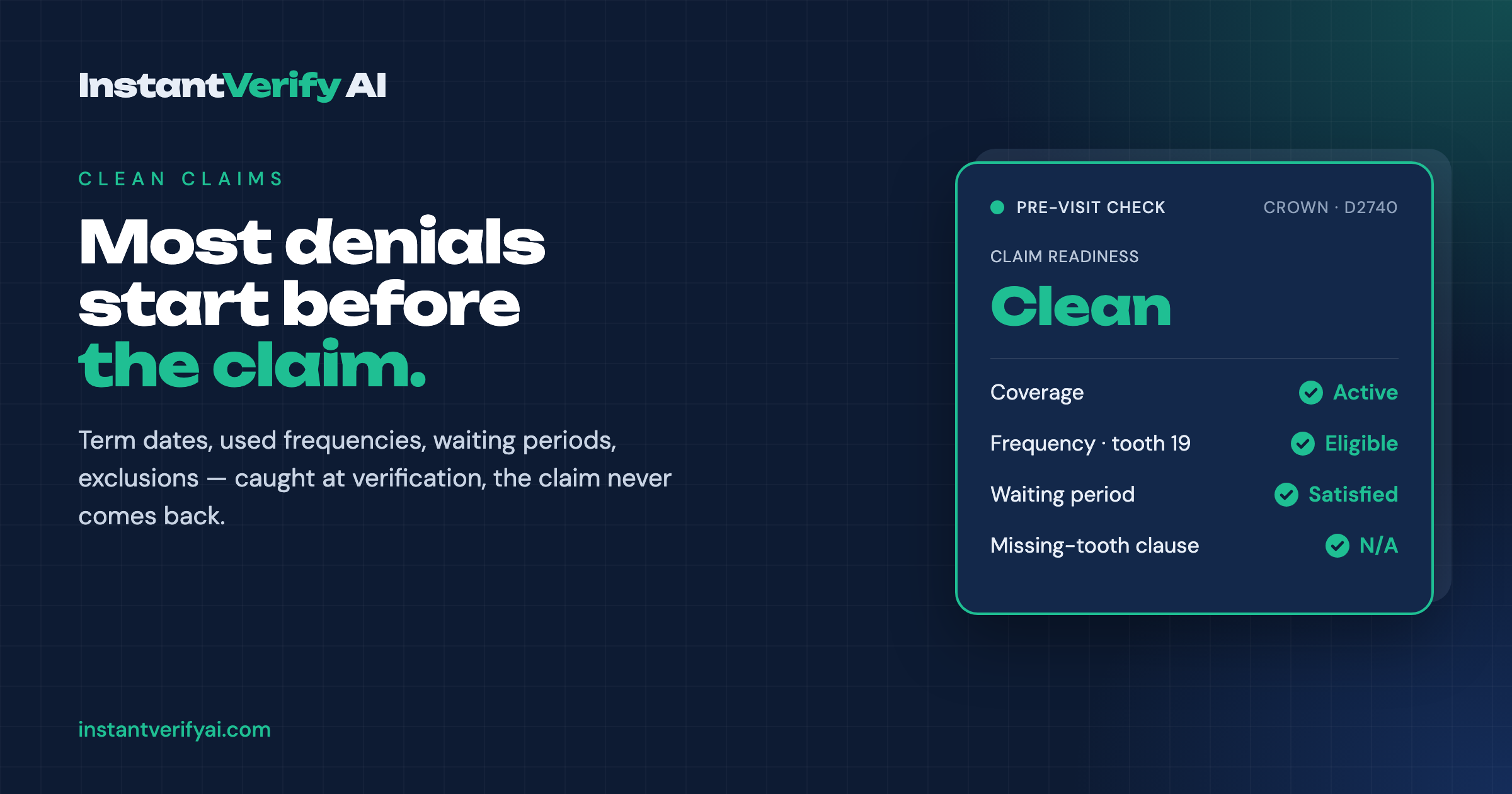
Look at the denial reasons that come up again and again in a dental office, and most of them describe a fact that existed before the patient was seen:
- Coverage terminated or not yet effective. The plan ended last month, or the new one has not started.
- Frequency limit exceeded. The patient already had two cleanings this year, possibly at another office.
- Waiting period not satisfied. The major-services clock on a new plan had not run out.
- Missing tooth or other plan exclusion. The replacement was never going to be covered.
- Subscriber or patient information mismatch. The wrong member ID, the wrong date of birth, the wrong subscriber.
None of these are billing errors. They are verification facts that did not make it into the record before treatment. The claim simply reported what happened, and the carrier responded with what it already knew.
Why the cost lands so late
A missed field at verification costs almost nothing in the moment. The appointment happens, the patient leaves, and the work gets billed. Everything looks fine.
The cost shows up weeks later, and it compounds. There is the staff time on the phone. There is the delay in payment. There is the conversation with the patient when a balance they were not expecting moves onto their account. And sometimes there is a write-off, because the denial was correct and there was nothing to appeal.
The same fact, caught at verification, would have taken a minute to handle. The office could have rescheduled the cleaning, changed the treatment plan, collected up front, or sent a predetermination. The options narrow sharply once the treatment is done.
Clean claims are a verification outcome
Practices that work their denials usually focus on the claim itself: better coding, better attachments, faster follow-up. That work matters, and it catches the denials that really are billing problems.
But the largest lever is earlier. A verification that reads the fields that actually drive denials, such as term dates, frequency history, waiting periods and plan exclusions, stops those denials from being created in the first place. A claim built on complete verification is not guaranteed to be paid, but it is far less likely to come back for a reason the office could have known.
Where to look first
If the team wants to test this, the exercise is simple. Pull the last month of denials and sort them by reason. Mark each one with a single question: could this have been known at verification?
For most offices, the answer will be yes for a large share of the pile. That share is the part of the denial workload that can be eliminated, not just managed. And every denial eliminated at verification is an afternoon on hold the team gets back.
InstantVerify AI helps dental practices automate insurance verification, eliminate missed fields, and deliver confident benefit estimates every day. Learn more →
Get the Tuesday newsletter
One short email a week about dental insurance verification and front desk life. Unsubscribe anytime.