Benefits that quietly disappear
Somewhere in every practice's records is a patient with an unscheduled crown, a met deductible, and most of an annual maximum still unused. In most plans, that unused maximum does not roll over. When the benefit year ends, it is simply gone.
The patient usually does not know. They meant to come back after the treatment plan was presented. Life got in the way. Nobody called.
Year-end outreach fixes that. It is not a sales push. It is telling patients something true and time-sensitive about benefits they are already paying for.
Start with the list, not the phone
The mistake is starting with a generic reminder to everyone. "Use your benefits before the year ends" lands like junk mail. It asks the patient to do the work of figuring out whether it applies to them.
Effective outreach starts with a specific list. The practice management system already knows who has diagnosed treatment that was never scheduled. That is the starting pool.
From there, the useful filters are simple:
- Open treatment. Patients with a presented but unscheduled plan, or overdue for recall.
- Remaining maximum. How much the plan will still pay this benefit year.
- Deductible status. A patient who has already met the deductible gets more from the plan on the next visit than they will in January.
- Benefit year end date. Many plans end December 31. Some end in other months, and those patients belong on a different list at a different time.
The patients who meet all four are the ones to call first. Everyone else can still hear from the office, but the first calls should go where the benefit and the need are both real.
Verify before you reach out
A list built from the practice's own records has a blind spot. The practice sees the claims it submitted. It does not see the specialist visit in August or the emergency visit at another office while the patient was traveling.
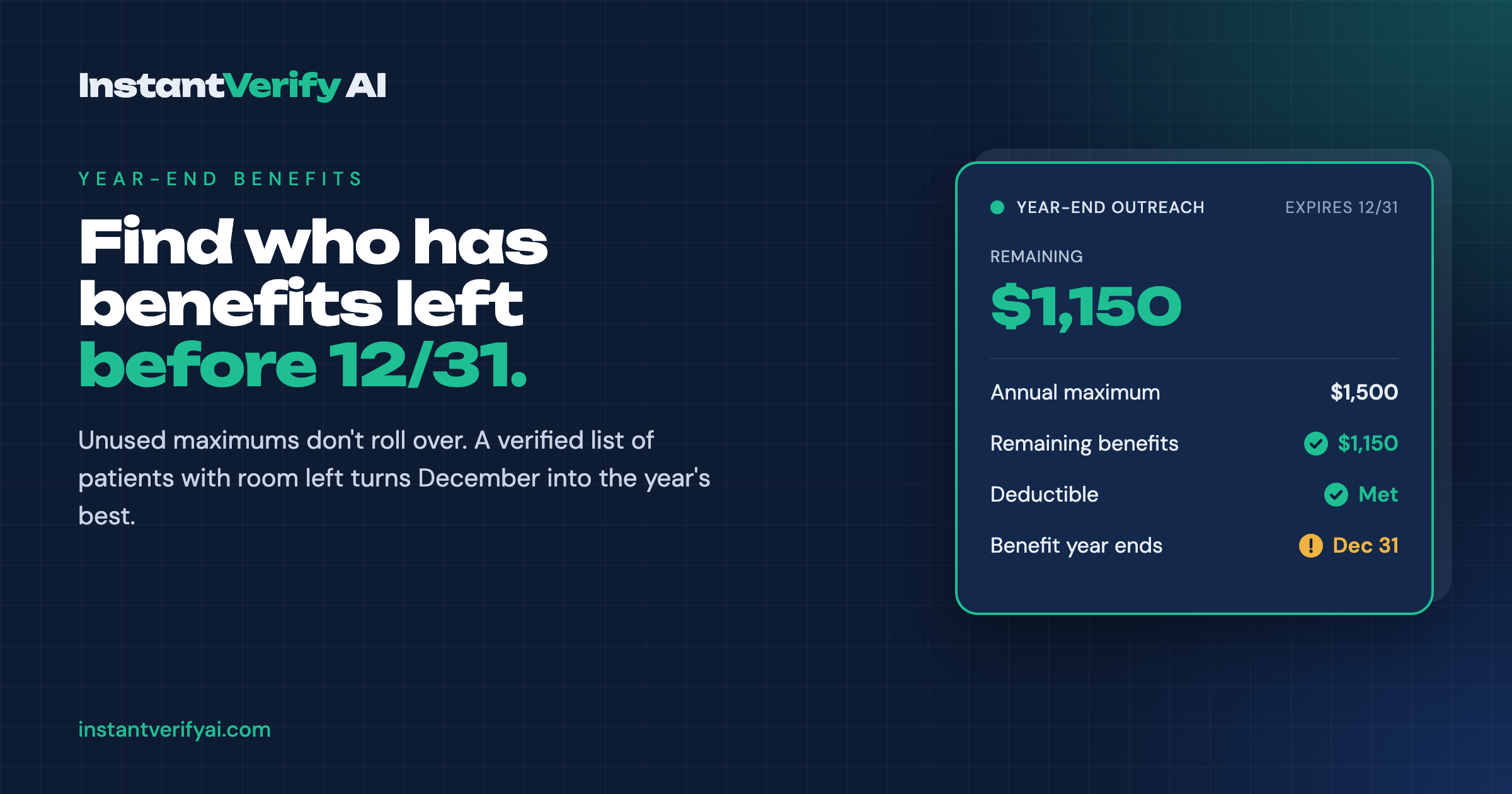
So the remaining maximum in the chart can be higher than what the carrier will actually pay. Call a patient to say they have $1,150 left when they really have $300, and the outreach becomes the start of a surprise bill.
Verifying the shortlist before the calls go out keeps the message honest. It also catches patients whose coverage changed during the year, whose plan termed, or who switched carriers when their employer did.
What the call should actually say
With verified numbers, the message writes itself and it is specific to the patient.
Your plan has about $1,150 remaining for this benefit year, and your deductible is already met. The crown the doctor recommended in the spring would be covered at your plan's major rate. Those benefits end on December 31. We have openings in the next few weeks if you would like to take care of it.
That is a very different call from "just checking in." The patient hears a real number, a real deadline, and a real reason to act. Many will schedule. Some will not, and that is their choice to make with good information.
Some patients also have flexible spending account dollars with their own year-end rules. The office does not need to advise on those, but a mention can help a patient plan.
Start before December
The last weeks of the year fill quickly. Hygiene schedules are already full of patients using their second cleaning. Holidays shorten the calendar. A list worked in mid-December runs out of chair time before it runs out of names.
The practices that do this well start in October or early November. They verify the list, make the calls, and book across several weeks instead of cramming everything into the final days.
The result is a strong end of year that does not depend on luck, and patients who remember that the office looked out for them.
InstantVerify AI helps dental practices automate insurance verification, eliminate missed fields, and deliver confident benefit estimates every day. Learn more →
Get the Tuesday newsletter
One short email a week about dental insurance verification and front desk life. Unsubscribe anytime.