The visit that was already paid for
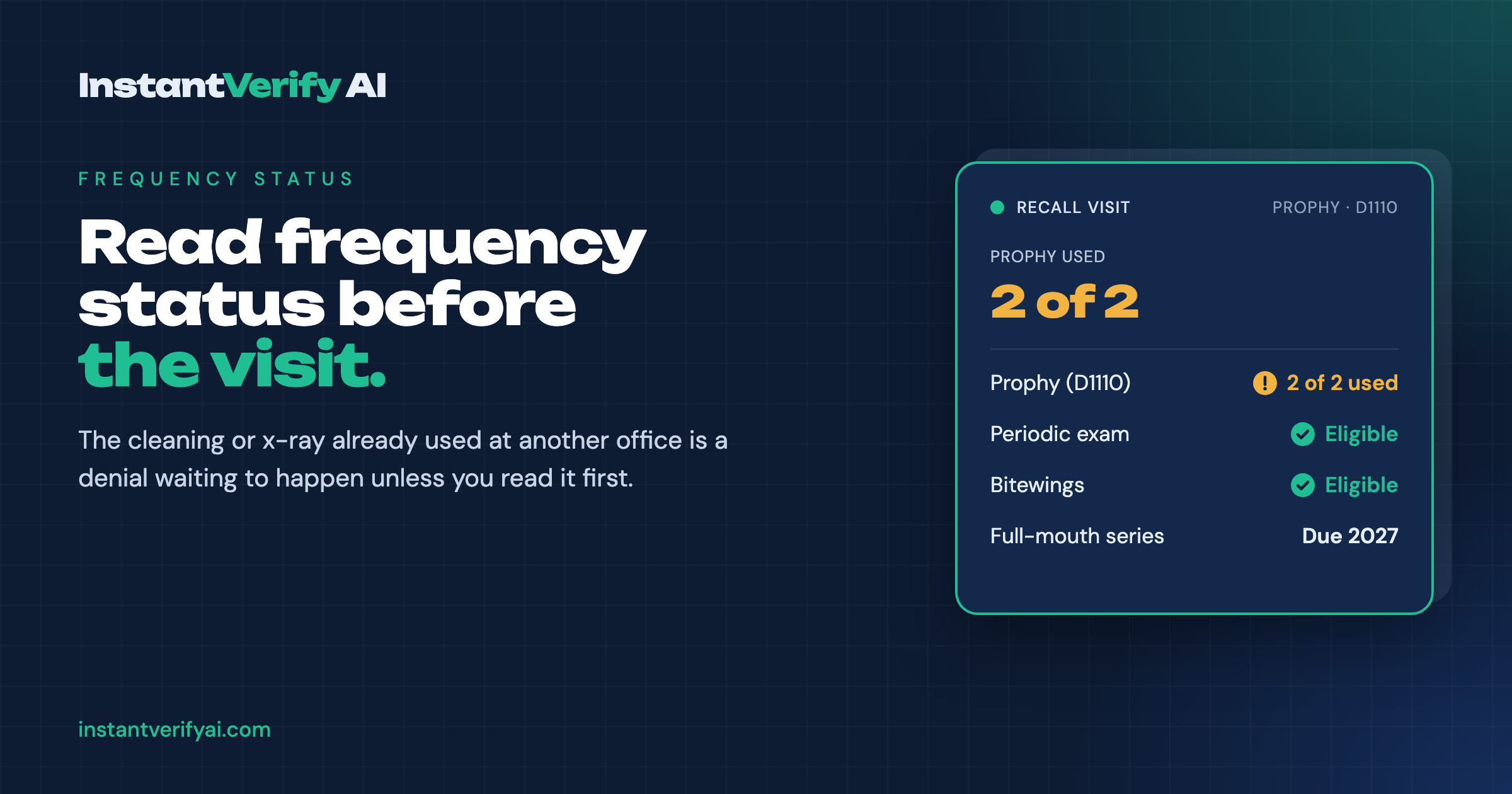
A patient comes in for a routine cleaning. The plan covers preventive care at 100%, so the office tells them there is nothing to pay. The hygienist does the prophy, takes bitewings, and the doctor does an exam.
Three weeks later, the claim comes back. The prophy was denied. The patient had two cleanings earlier in the year at a practice near their old job. The plan allows two per benefit year, and both were used.
Now the office has to call a patient who was told the visit was free and explain that it was not. Nobody enjoys that call, and the patient rarely hears it as anything but a mistake.
What frequency limits actually are
A frequency limit is a rule about how often the plan will pay for a procedure. Almost every plan has them, and they apply to the most routine work a practice does.
The familiar ones cover cleanings, exams, bitewings, full-mouth or panoramic x-rays, and fluoride. Many restorative procedures carry them too. Crowns and bridges often have a replacement limit on the same tooth, and scaling and root planing is commonly limited per quadrant over a set period.
The procedure is covered. It is just not covered again until the clock allows it.
The wording matters as much as the number
"Two cleanings a year" sounds simple. It can mean several different things.
- Twice per benefit year. Two cleanings any time between the start and end of the plan year, regardless of spacing.
- Once every six months. The second cleaning is denied if it falls even a few days short of six months after the first.
- Two per rolling twelve months. The count looks back a year from the date of service, not from the start of the plan year.
- Shared limits. Some plans count different codes against the same limit, such as certain exam codes, or a prophy and periodontal maintenance.
The same patient, on the same day, can be eligible under one wording and denied under another. A verification that records "2 per year" without the rule behind it has left out the part that decides the claim.
Why history gets missed
Frequency status depends on history, and history is exactly what a rushed verification skips.
The plan's rule is usually easy to find. What the patient has already used is harder. It may sit in a claims history section of the portal, a few clicks away from the coverage summary. A basic eligibility check typically does not include it at all.
And the practice's own records only show its own work. Cleanings at a previous dentist, x-rays taken at a specialist, an exam at an emergency visit while traveling: all of these count against the patient's limits, and none of them are in your chart.
Timing adds one more gap. Claims from another office may not be processed yet when you check, so the history can look cleaner than it is.
Reading frequency before the visit
The fix is to read frequency status for the procedures actually scheduled, before the patient arrives.
For a recall visit, that means checking the prophy, exam, and x-ray history against the plan's rule and the appointment date. For a crown, it means checking whether that tooth has had a crown within the replacement period.
When something is not eligible, the office has options. Move the appointment past the eligibility date. Swap bitewings for a later visit. Or tell the patient the cost up front and let them decide. Any of those is better than a denial and a surprise statement.
This is where procedure-aware verification earns its place. A check that knows what is scheduled reads the frequencies that apply to those procedures, shows used versus remaining, and flags a history it could not confirm instead of assuming the patient is eligible. That is exactly what shows up in the morning report before the first patient walks in.
The limit will still be there. The awkward phone call does not have to be.
InstantVerify AI helps dental practices automate insurance verification, eliminate missed fields, and deliver confident benefit estimates every day. Learn more →
Get the Tuesday newsletter
One short email a week about dental insurance verification and front desk life. Unsubscribe anytime.